In an age where info breaches and cyber threats govern head, encryption has become a mainstay of digital security. Whether keeping delicate trade files, healthcare records, or individual communications, encryption guarantees that data debris illegible to illegal parties. However, not all encryption methods are designed equally.
Two of ultimate widely discussed approaches are end-to-end encryption (E2EE) and cover encryption. Understanding the differences between these secure file sharing procedures is essential for making cognizant conclusions about securing digital property.
What Is E-to-E Encryption?
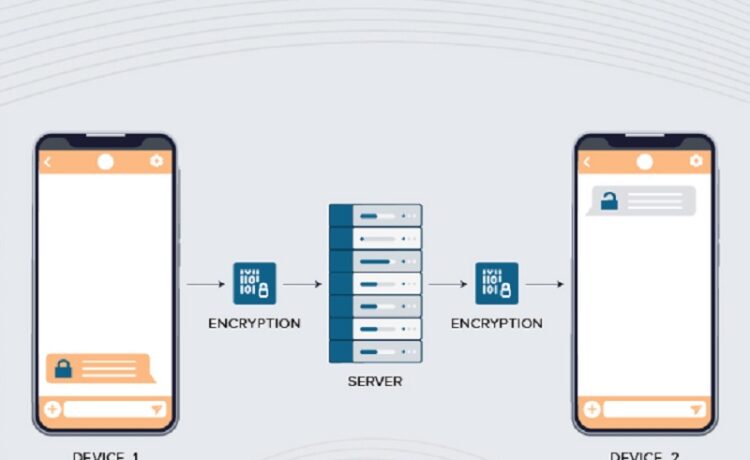
This guarantees that data is encrypted on the sender’s device and remains encrypted as far as it reaches the recipient. This wealth that even if the news passes through servers, networks, or third-party structures, cannot be accessed or stated by intermediaries.
- Data remains protected during the whole of transmission.
- Only the corresponding parties can access the content.
- Intermediaries, containing service providers, cannot express the data.
What Is Layered Encryption?
Layered encryption, sometimes referred to as “defense in depth,” includes applying diversified encryption methods at different stages of data handling. Instead of depending on a single coating of protection, data is encrypted both in transit (when mobile across networks) and at rest (when stored on servers, databases, or devices).
Key characteristics of flaky encryption include:
- Multiple points of encryption across storage and transfer.
- Enhanced resilience if one coating is compromised.
- Flexibility to accustom to regulatory and agreement requirements.
Key Differences
1. Scope of Security
- End-to-end encryption focuses on protecting info between two endpoints.
- Layered encryption protects data across allure entire lifecycle, from depository to transit.
2. Access Control
- In E2EE, help providers cannot access data even though they host it.
- In layered encryption, help providers may still hold the answers for storage encryption, giving them a limited approach.
3. Complexity
- End-to-end encryption requires careful key administration but is straightforward in allure focus.
- Layered encryption can be more complicated, involving multiple agreements and encryption standards.
4. Use Cases
- End-to-end process is usually applied to unstable messaging, confidential ideas, and scenarios place privacy is superior.
- Layered encryption is more common in enterprise environments, where supervisory agreement, data backups, and disaster recovery demand multiple safety layers.
Advantages and Limitations
1. End-to-End process of Encryption
• Advantages:
Maximum secrecy, forceful protection against blocking, restricted uncovering to tertiary parties.
• Limitations:
It can complicate search, indexing, and dossier administration because providers cannot approach the content.
2. Layered Encryption
• Benefits:
Comprehensive coverage across depository and transit, adaptable to agreement standards, repetition in case the individual layer fails.
• Limitations:
Potentially more means-intensive, it may allow reserved access by service providers or administrators.
Conclusion
Encryption is not just a mechanical safeguard; it is a trust-explanation device in the automated globe. By understanding the strengths and restraints of each approach, trades and things can select the right strategy—or fortification of strategies—to secure valuable inside information effectively.